By: Katherine Brooks
Source: Huffington Post
http://www.huffingtonpost.com/2014/10/17/amy-elkins_n_5993260.html?utm_hp_ref=arts
It was 2009 when photographer Amy Elkins began "Black is the Day, Black is the Night", a photography project which began as a mere connection, but later grew into a large scale art project. She found the inspiration for this within the minds and lives of prison inmates, specifically seven men, who had been in prison for thirteen to twenty-six years, and were either serving a life or death sentence. Reaching them through a prison pen pal system. Elkins was able to gain a perception of the minds of the prisoners (whom she had never met), and how they felt within concrete and confinement, and the memories that buried them within their now hopeless confines and promises of freedom. By being able to achieve such a level of connection with them, she was able to depict their lives through her chillsome images in such a way as if instilling in the viewer the feeling of being the prisoners themselves. Through a period of five years, Elkins worked on this connection, later sending the completed projects to the inmates, who provided input and occasionally sent art themselves in return. Currently, she only keeps contact with one man (in prison since 1995, when he was the age of sixteen), as the rest were either released, response-less, or victim to the death penalty "despite maintaining their innocence"(Brooks, 1), as stated by Elkins. This concept is one often brought up to question, especially in the current day, as the life sentences in America reached a record high in 2012, while a large percentage of those wrongly convicted of murder are "neither executed nor exonerated" (Brooks, 1), according the The Sentencing Project, but rather "sentenced, or re-sentenced to prison for life, and then forgotten (Brooks, 1).
Such projects, contrary to the perceptions of the general public, may not necessarily be as support towards those convicted of heinous crimes. Such projects, ironically, may have meaning all their own, slight, subtle, open to interpretation. Such projects may be for the purpose of awareness, the depiction of a life that people are often blind to, a life that is unimaginable, almost impossible to relate with. And these are the lives, strangely, with which one may possibly build the strongest connection with in the briefest period of time, as these are the lives which carry a certain weight, a peculiar mystery or arcane nature to them. And often, works such as these are done to evoke feelings, within which sympathy can guiltlessly have a place, as the viewers of such images and the readers of such words feel as if they themselves are within the six by nine feet cubicles for twenty-two and a half hours a day, "not only facing their own mortality, but doing so in total isolation" (Brooks, 1), as stated by Elkins, waiting ever so patiently as the seconds tick by, for death to come to them.

Postcard from Solitary. "This is a place in the world where I would love to go wherever it is."

(Not the Man I Once Was). Portrait of a man 19 years into his life without parole (solitary) sentence where the ratio of years spent in prison to years alive determined the level of image loss.

Letter written in 2010 by a man on death row in Mississippi, describing a fellow inmate's execution. Two years later his execution also took place, despite the many appeals he had filed in attempts to save his life
.
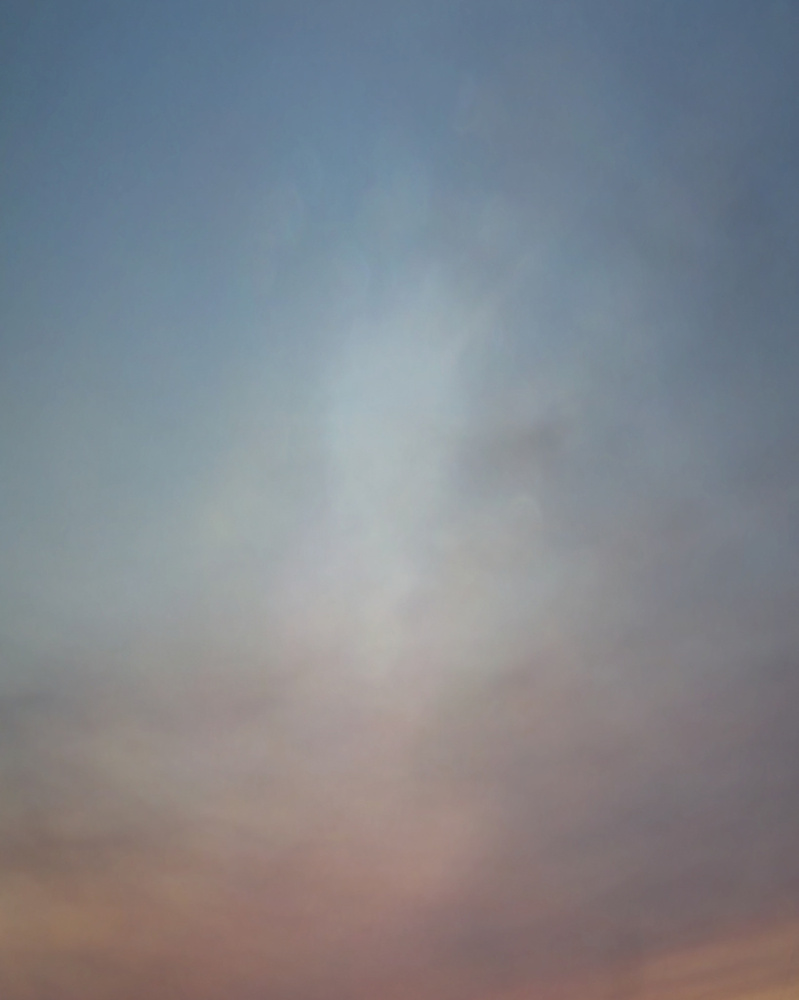
Fourteen Years out of a Life Sentence (Sky). A pen pal serving life without the possibility of parole in a super max prison (solitary) described being able to see the sky through a metal grated skylight in the small concrete exercise area he was permitted in alone for one hour a day. The additional 23 hours were spent in isolation. This image was constructed out of his description of the open sky he wished to see, using appropriated images which were then composited to account for the amount of years spent in prison.
 Nine Years out of a Death Row Sentence (Forest). A pen pal 13 years into his death row sentence describes a childhood memory of taking refuge in the forest throughout his youth. This image was constructed out of appropriated images and composited to account for the amount of years spent in prison.
No comments:
Post a Comment